- The future market for spunbond nonwoven fabrics will place greater emphasis on differentiated competition.
- Spunbond Nonwoven Fabric: Multi-field Applications and Scientific Selection Guide
- Observation on the Spunbond Nonwoven Fabric Market: Purchasing Becomes More Rational, Quality and Service Become Key Factors in Cooperation
- Common Applications and Selection Guidelines for Spunbond Nonwoven Fabrics
- The market application of spunbond non-woven fabric continues to deepen.

- Telephone: 0551- 66779966
- Cellphone: 18955130444
- Email: 58792982@qq.com
- Address: Building 1-2, East of Wubu Village Section, Hehuai Road, Wushan Town, Changfeng County, Hefei City, Anhui Province
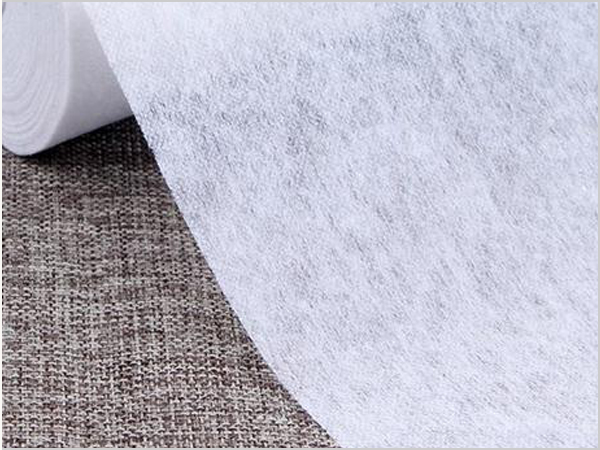
In the field of nonwoven materials, spunbond nonwoven fabric, with its stable performance and wide applicability, has become the basic raw material for multiple industries. The production principle of it is not complicated: by melting and extruding polymer chips, stretching them into fibers, directly laying the net, and then solidifying and shaping through heat rolling or chemical methods. This "spinning and netting" process enables spunbond nonwoven fabric to have both good strength and a uniform pore structure.
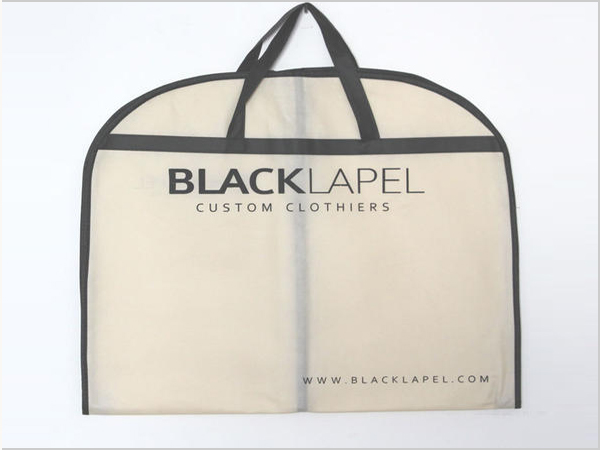
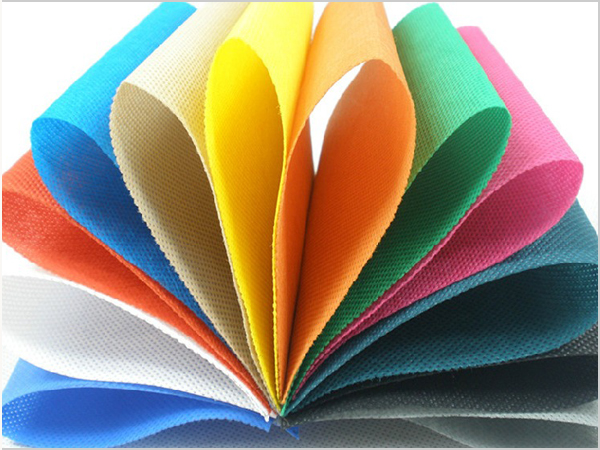
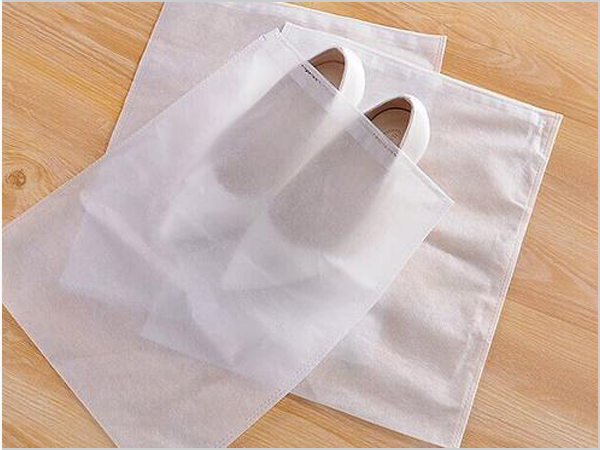
The core advantage of spunbond nonwoven fabric lies in its physical properties. Taking common polypropylene non-woven fabric as an example, it has the advantages of being lightweight, having high tensile strength, being resistant to acids and alkalis, and being non-itchy. During the production process, by adjusting the raw material ratio and process parameters, different weights, widths, and functional products can be produced, adapting to various usage scenarios. It can be seen in the medical field such as surgical gowns and protective suits, in agriculture as covering materials, and in daily life as shopping bags and storage items.
In the field of architecture and civil engineering, spunbond nonwoven fabric also plays a significant role. As the base fabric for waterproof roofing materials, it can enhance the tensile strength and dimensional stability of the roofing materials, and extend the service life of the waterproof layer. In road and water conservancy projects, spunbond non-woven fabric is used as an isolation, filtration and reinforcement layer, effectively improving the mechanical properties of the structural layer.
When choosing spunbond nonwoven fabric, users usually pay attention to several key indicators: unit area mass, breaking strength, elongation at break, and anti-static water pressure resistance. The requirements for parameters vary greatly depending on different application scenarios. For example, medical hygiene products focus on uniformity and hygiene indicators, while geotechnical products place more emphasis on durability and resistance to chemical corrosion. Regular suppliers usually provide complete test reports to help the purchasing party confirm whether the product meets the usage requirements.
From the production perspective, the process of spunbond nonwoven fabric has become quite mature. Polypropylene (PP) is the main raw material, which has a stable source and can be recycled and reused, giving the entire industrial chain certain advantages in terms of resource utilization and environmental protection. With the continuous expansion of application fields, spunbond nonwoven fabric is continuously developing in the direction of functional specialization and quality refinement, providing more reliable supporting materials for downstream industries.
- The future market for spunbond nonwoven fabrics will place greater emphasis on differentia
- Spunbond Nonwoven Fabric: Multi-field Applications and Scientific Selection Guide
- Observation on the Spunbond Nonwoven Fabric Market: Purchasing Becomes More Rational, Qual
- Common Applications and Selection Guidelines for Spunbond Nonwoven Fabrics
- The market application of spunbond non-woven fabric continues to deepen.
- A Guide for Selecting the Right Application for Nonwoven Fabrics with Spunbond Technology
- The application scope of spunbond non-woven fabric is continuously expanding, and downstre
- PP Nonwoven Fabric Purchase Guide: Understand These Points to Avoid Making Mistakes When S
- Is spunbond non-woven fabric durable? Let's find out!
- The industry's confidence has been fully restored, and the sector is witnessing a turning