- The future market for spunbond nonwoven fabrics will place greater emphasis on differentiated competition.
- Spunbond Nonwoven Fabric: Multi-field Applications and Scientific Selection Guide
- Observation on the Spunbond Nonwoven Fabric Market: Purchasing Becomes More Rational, Quality and Service Become Key Factors in Cooperation
- Common Applications and Selection Guidelines for Spunbond Nonwoven Fabrics
- The market application of spunbond non-woven fabric continues to deepen.

- Telephone: 0551- 66779966
- Cellphone: 18955130444
- Email: 58792982@qq.com
- Address: Building 1-2, East of Wubu Village Section, Hehuai Road, Wushan Town, Changfeng County, Hefei City, Anhui Province
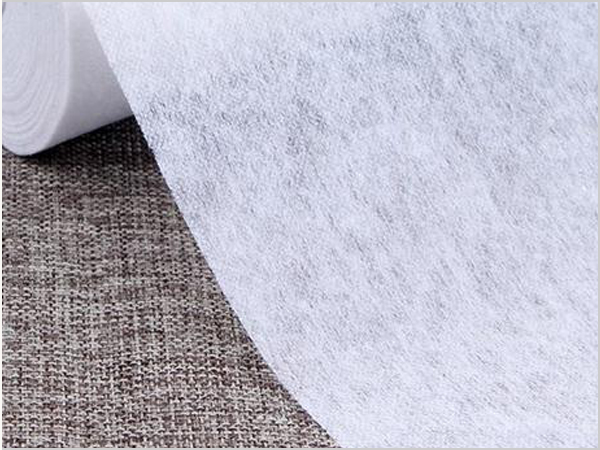
In the field of modern materials, spunbond nonwoven fabric, due to its stable physical properties and wide applicability, has become an indispensable basic material in industrial packaging, medical care, and agricultural protection and other scenarios. This type of material is directly produced through the spinning and netting process, eliminating the traditional weaving step of yarn interweaving. It maintains high strength while also ensuring good breathability and uniformity.
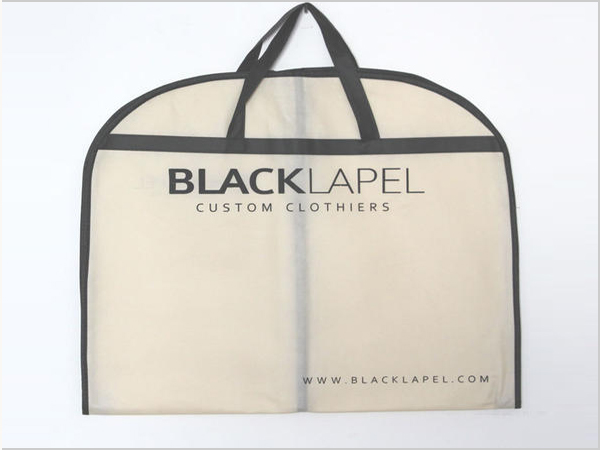
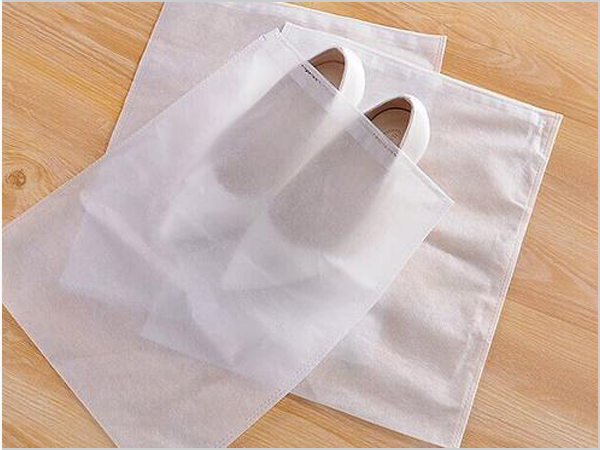
From the perspective of material classification, polypropylene spunbond nonwoven fabric has the characteristics of resistance to acid and alkali and anti-aging. It is commonly used in the production of environmental bags, the base fabric of building waterproof sheets, and the protective layer of sofas. Its lightweight feature can effectively reduce transportation costs and is easy to be recycled and reused, which is in line with the current trend of green production. Polyester spunbond non-woven fabric performs outstandingly in terms of high-temperature resistance and dimensional stability, and is suitable for use as a filtering material, cable coating layer, or support layer for automotive interiors.
In practical applications, the selection of non-woven fabric materials should be determined based on specific requirements. For instance, medical protective products have clear requirements for bacterial barrier efficiency, while the agricultural covering field focuses more on the balance between water permeability and UV resistance. By adjusting the fiber fineness, hot rolling temperature, and rolling point shape, manufacturers can customize products of different weights, thicknesses, and surface textures to meet the diverse needs ranging from one-time consumables to long-term use components.
With the continuous advancement of manufacturing technology, the production energy consumption of spunbond nonwoven fabrics has gradually decreased. Various specialized product categories such as antibacterial, anti-static, and water-repellent types have emerged one after another. These materials not only replace some traditional plastic products but also expand into more high-value-added application scenarios through composite processes and combination with meltblown fabrics, breathable membranes, etc.
For the purchasing party, paying attention to key indicators such as the uniformity of spunbond nonwoven fabric materials, the elongation at break, and the deviation in unit area quality helps ensure the stability of the finished product quality. Meanwhile, the manufacturing enterprise can optimize parameters such as spinning temperature, cooling conditions, and laying speed to increase production capacity while maintaining the consistency of product performance.
From the perspective of the industrial chain, spunbond nonwoven fabric, as a basic industrial material, its development has always been closely linked to the environmental protection policy orientation and the upgrading of terminal consumption. Continuous investment in the research and development of degradable materials and the increase of the proportion of recycled materials has become an important direction for promoting industry progress.
Anhui Xiangshuo Nonwoven Fabric Technology Co., Ltd. is located in Wushan Town, Changfeng County, Hefei City, Anhui Province. It is close to Jiangsu, Zhejiang and Shanghai, with convenient transportation. It covers an area of 42 mu. The company was established in July 2019 with a registered capital of 10 million yuan. It is committed to the development and production of environmentally friendly non-woven consumables and is an emerging production enterprise with complete equipment and strong technical strength. It has been rated as a key investment attraction enterprise in Xinqiao Industrial Zone of Hefei City. Currently, the company has PP non-woven fabric and polypropylene spunbond non-woven fabric production lines with widths ranging from 1.8 meters to 3.2 meters and weights ranging from 9 to 250 g/m. The products are green and environmentally friendly products with features such as flame retardancy, anti-aging, anti-static, acid and alkali resistance, non-toxicity, pollution-free, and degradability. Our company's main business scope includes: non-woven fabric, non-woven fabric products, non-woven fabric new materials research and development, production and sales; manufacturing and sales of chemical fiber equipment and non-woven fabric equipment; research and production of functional mother mixtures for plastic masterbatch; research and production of outdoor products such as PE woven tarpaulins, furniture covers, plastic nets, trash cans, and plastic flower houses.

- The future market for spunbond nonwoven fabrics will place greater emphasis on differentia
- Spunbond Nonwoven Fabric: Multi-field Applications and Scientific Selection Guide
- Observation on the Spunbond Nonwoven Fabric Market: Purchasing Becomes More Rational, Qual
- Common Applications and Selection Guidelines for Spunbond Nonwoven Fabrics
- The market application of spunbond non-woven fabric continues to deepen.
- A Guide for Selecting the Right Application for Nonwoven Fabrics with Spunbond Technology
- The application scope of spunbond non-woven fabric is continuously expanding, and downstre
- PP Nonwoven Fabric Purchase Guide: Understand These Points to Avoid Making Mistakes When S
- Is spunbond non-woven fabric durable? Let's find out!
- The industry's confidence has been fully restored, and the sector is witnessing a turning