- The future market for spunbond nonwoven fabrics will place greater emphasis on differentiated competition.
- Spunbond Nonwoven Fabric: Multi-field Applications and Scientific Selection Guide
- Observation on the Spunbond Nonwoven Fabric Market: Purchasing Becomes More Rational, Quality and Service Become Key Factors in Cooperation
- Common Applications and Selection Guidelines for Spunbond Nonwoven Fabrics
- The market application of spunbond non-woven fabric continues to deepen.

- Telephone: 0551- 66779966
- Cellphone: 18955130444
- Email: 58792982@qq.com
- Address: Building 1-2, East of Wubu Village Section, Hehuai Road, Wushan Town, Changfeng County, Hefei City, Anhui Province
In daily life and industrial production, there is a material that is everywhere but often overlooked - it could be the inner lining of supermarket shopping bags, the core layer of medical protective clothing, or the base material of household dust covers. This is spunbond nonwoven fabric, a new type of material manufactured through direct "spinning into fabric" technology, which is quietly changing the landscape of the traditional textile industry.
Spunbond technology: An efficient materials Revolution
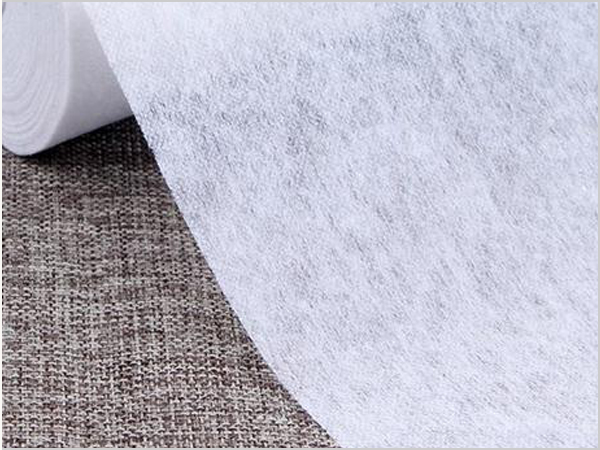
Unlike traditional textiles that require multiple processes such as spinning and weaving, the production of spunbond nonwoven fabrics can be regarded as an "efficiency revolution". The core process is to melt polymer particles (such as polypropylene) and extrude them from a spinneret into continuous long filaments. These fine filaments are directly laid into a web under the stretching of high-speed gas flow and then reinforced through hot rolling or chemical methods, instantly transforming from "filaments" into a firm "fabric". This one-step production method significantly reduces energy consumption and time costs, achieving a unity of high output and stability.
Outstanding performance and ubiquitous application scenarios
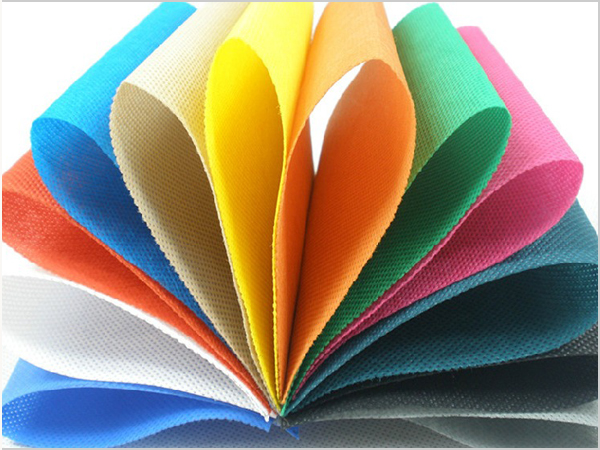
The success of spunbond nonwoven fabric stems from its excellent comprehensive performance. It avoids the shortcomings of traditional fabrics such as easy thread shedding and roughness, and has good strength, flexibility and uniformity. Meanwhile, through adjustments in raw materials and processes, special functions such as anti-static, water-repellent and antibacterial can be easily achieved. For this reason, its application fields are extremely extensive:
Medical protection: The production of surgical gowns, isolation suits and masks benefits from their excellent barrier properties and breathability.
Home life: Used for mattress linings, sofa linings, and curtains, providing durable and economical solutions.
In the agricultural field: As a harvest cloth and frost-proof cloth, it protects the growth of crops.
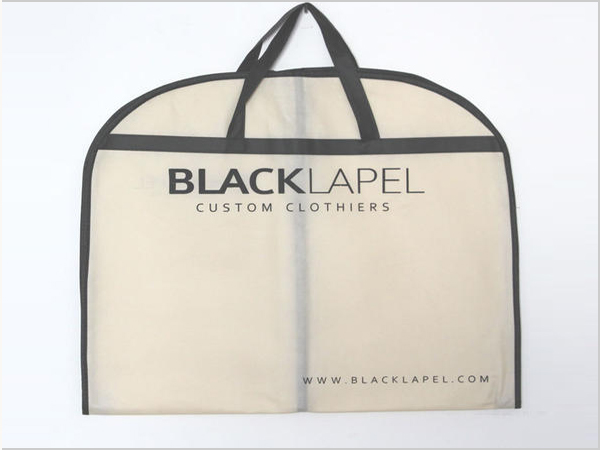
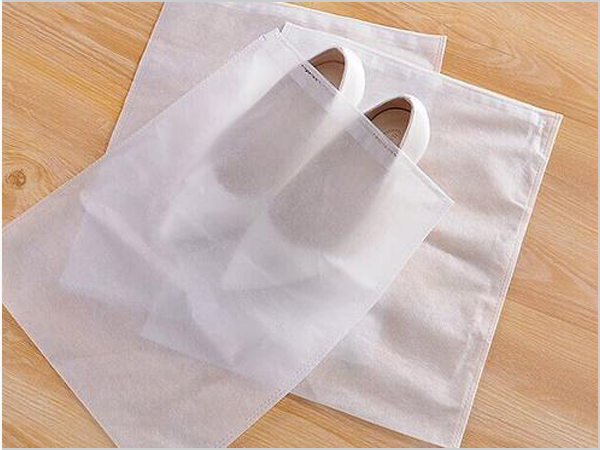
Packaging materials: Become the preferred choice for eco-friendly shopping bags and gift packaging, balancing strength and cost.
- The future market for spunbond nonwoven fabrics will place greater emphasis on differentia
- Spunbond Nonwoven Fabric: Multi-field Applications and Scientific Selection Guide
- Observation on the Spunbond Nonwoven Fabric Market: Purchasing Becomes More Rational, Qual
- Common Applications and Selection Guidelines for Spunbond Nonwoven Fabrics
- The market application of spunbond non-woven fabric continues to deepen.
- A Guide for Selecting the Right Application for Nonwoven Fabrics with Spunbond Technology
- The application scope of spunbond non-woven fabric is continuously expanding, and downstre
- PP Nonwoven Fabric Purchase Guide: Understand These Points to Avoid Making Mistakes When S
- Is spunbond non-woven fabric durable? Let's find out!
- The industry's confidence has been fully restored, and the sector is witnessing a turning