- The future market for spunbond nonwoven fabrics will place greater emphasis on differentiated competition.
- Spunbond Nonwoven Fabric: Multi-field Applications and Scientific Selection Guide
- Observation on the Spunbond Nonwoven Fabric Market: Purchasing Becomes More Rational, Quality and Service Become Key Factors in Cooperation
- Common Applications and Selection Guidelines for Spunbond Nonwoven Fabrics
- The market application of spunbond non-woven fabric continues to deepen.

- Telephone: 0551- 66779966
- Cellphone: 18955130444
- Email: 58792982@qq.com
- Address: Building 1-2, East of Wubu Village Section, Hehuai Road, Wushan Town, Changfeng County, Hefei City, Anhui Province
The outstanding performance of PP non-woven fabric is inseparable from its mature and efficient production process. From ordinary polypropylene particles to the functional fabric rolls we see every day, the entire process integrates the technical essence of both chemical engineering and textile manufacturing. Understanding its production process helps us gain a deeper understanding of the value of this material.
The production of PP non-woven fabric begins with the preparation of raw materials. The main raw material is polypropylene resin chips. Depending on the requirements, an appropriate amount of color masterbatch or functional additives may be added to change the color of the product or give it special properties such as anti-aging and anti-static.
The core process is to spin and form a net. Currently, the spunbonding method is the mainstream technology for manufacturing PP non-woven fabrics. The principle is to melt the polypropylene particles at high temperature, and the molten material is extruded through the spinneret to form continuous long fibers. These fine long fibers are cooled and solidified under the stretching effect of high-speed air flow, and then are evenly laid on the moving webbing to form a fluffy net. This process determines the basic weight and uniformity of the non-woven fabric.
After the web is formed, it needs to be reinforced to achieve sufficient strength. There are various reinforcement methods, among which hot rolling reinforcement is widely used. The web is passed through a pair of heated rollers under specific temperatures and pressures, where the contact points between the fibers are thermally fused and bonded, thus becoming a sturdy sheet-like material. Another common method is needle-punch reinforcement, where thousands of needle-like spikes repeatedly puncture the web, causing the fibers to intertwine and bond with each other.
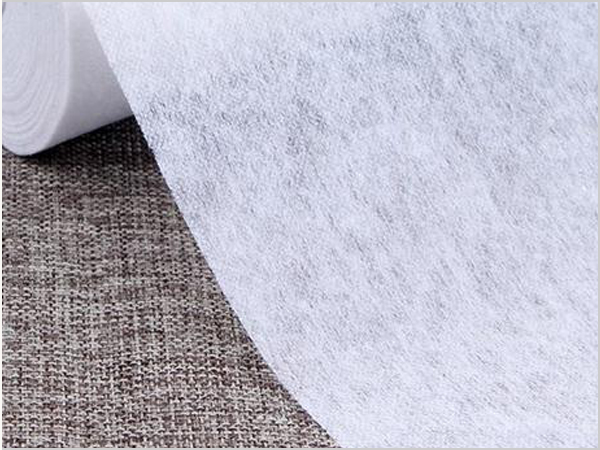
Finally, there is the post-processing and winding process. According to customer requirements, the produced PP non-woven fabric base cloth may need to undergo further processing such as printing, coating, and compounding. After completing all the processes, the finished product is wound into a standard width and length fabric roll using a precise winding machine. After passing the inspection, it can be packaged and shipped out.
The entire production process of PP non-woven fabric features a short process, high output, and strong variability. It can flexibly adjust process parameters according to the different demands of the downstream market, and produce various specifications of products ranging from ultra-thin to thick, from soft to stiff, to meet the diverse requirements in fields such as medical, hygiene, filtration, and packaging.
- The future market for spunbond nonwoven fabrics will place greater emphasis on differentia
- Spunbond Nonwoven Fabric: Multi-field Applications and Scientific Selection Guide
- Observation on the Spunbond Nonwoven Fabric Market: Purchasing Becomes More Rational, Qual
- Common Applications and Selection Guidelines for Spunbond Nonwoven Fabrics
- The market application of spunbond non-woven fabric continues to deepen.
- A Guide for Selecting the Right Application for Nonwoven Fabrics with Spunbond Technology
- The application scope of spunbond non-woven fabric is continuously expanding, and downstre
- PP Nonwoven Fabric Purchase Guide: Understand These Points to Avoid Making Mistakes When S
- Is spunbond non-woven fabric durable? Let's find out!
- The industry's confidence has been fully restored, and the sector is witnessing a turning